How Much Does It Cost to Install an EV Charger in Santa Rosa?
Last reviewed: July 21, 2026
What Santa Rosa Homeowners Should Know About EV Charger Installation Costs
A straightforward home EV charger installation may cost substantially less than a project requiring a long wiring run, electrical-panel work or trenching. That is why a price quoted for one Santa Rosa home may have little relevance to another—even when both homeowners purchase the same charger.
For initial planning, a relatively simple Level 2 project may fall in the general range of about $1,000 to $2,500, including common charging equipment and professional installation. More involved projects can exceed $3,000, while installations requiring a panel replacement, electrical-service upgrade, extensive trenching or other major work may cost considerably more.
These figures are planning ranges, not estimates for a specific property. The only dependable way to determine the cost is to evaluate the home, electrical system, parking location and desired charging capacity.
Why EV Charger Installation Prices Vary
An EV charger is a substantial, continuous electrical load. Installing one involves more than attaching equipment to a garage wall. The electrician must determine whether the electrical system can support the charger, select the correct circuit and conductors, establish a safe wiring route and satisfy applicable permit and inspection requirements.
The largest cost variables generally include:
- Charger type and charging capacity
- Electrical-panel capacity and available breaker space
- Distance from the panel to the charging location
- Accessibility of the wiring route
- Indoor or outdoor installation
- Plug-in or hardwired equipment
- Permit and inspection requirements
- Trenching, drywall work or other site preparation
- Load-management equipment
- Panel or electrical-service upgrades
A useful estimate should identify these factors rather than presenting one unexplained total.
Charger Hardware Is Only Part of the Cost
Level 2 charging equipment is available at many price points. Basic units provide dependable charging with relatively few additional features. More expensive chargers may offer Wi-Fi connectivity, scheduled charging, energy-use reports, access controls or integration with home energy-management systems.
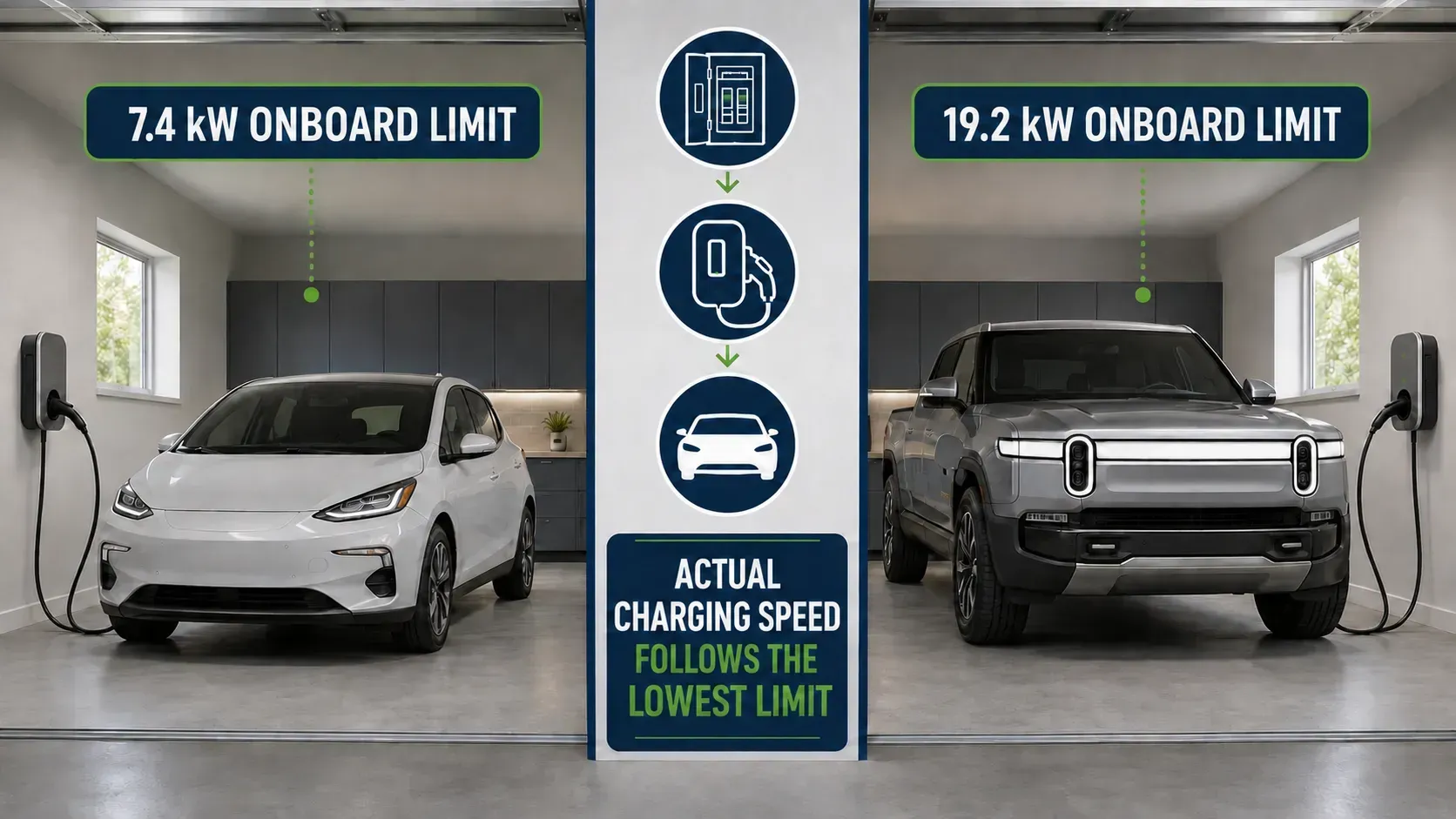
The most expensive charger is not automatically the best choice. The vehicle’s onboard charger determines the maximum rate at which it can accept AC power. Purchasing equipment with a higher output will not make a vehicle charge faster than that limit.
Before buying a charger, consider:
- The vehicle’s maximum AC charging rate
- The desired circuit capacity
- Cable length
- Indoor or outdoor placement
- Connector compatibility
- Smart features
- Warranty and support
- Whether a second EV may be added later
It is often worthwhile to discuss the equipment with the installer before purchasing it. This helps ensure that the selected charger is compatible with the planned circuit, location and electrical system.
For help comparing charging options, see our guide to Level 2 home EV charging.
What Is a Straightforward Installation?
A relatively straightforward Level 2 installation generally has several favorable characteristics:
- The existing electrical service has adequate capacity
- The panel has room for the required breaker
- The charging location is close to the panel
- The wiring route is open and accessible
- The charger is mounted indoors
- No trenching or substantial wall repair is required
- The installation does not require a panel or service upgrade
For example, a panel located in a garage with the charger mounted several feet away may allow a short, accessible circuit run. Labor and material requirements are easier to evaluate, and fewer surprises are likely once work begins.
Even a simple project still needs the correct conductor size, breaker, grounding, equipment mounting and permit handling. “Straightforward” should not mean informal or unpermitted.
Wiring Distance and Routing Can Change the Price
The distance between the electrical panel and charging location is one of the most important cost factors. A longer circuit requires more conductor, conduit and installation time.
Distance alone does not tell the entire story. A 40-foot route through an accessible attic or unfinished garage may be easier than a much shorter route through finished walls, masonry or areas with limited access.
Possible routing complications include:
- Finished ceilings and walls
- Crawl spaces with restricted access
- Multiple building levels
- Concrete or masonry surfaces
- Detached garages
- Driveways or landscaped areas
- Fire-rated assemblies
- Obstacles that require the circuit to take an indirect path
Before comparing estimates, confirm that each installer is proposing the same charger location and wiring route. A lower estimate may reflect a materially different scope rather than a better price.
Will the Electrical Panel Need an Upgrade?
A panel upgrade is not automatically required for every Level 2 charger. An electrician should perform a load assessment to determine whether the home can support the proposed charging load.
The assessment considers the electrical-service rating and existing household loads, including heating and cooling equipment, electric cooking, water heating, laundry appliances, solar equipment and other major electrical systems.
If the panel cannot support the charger at its maximum output, possible solutions may include:
- Installing the charger on a lower-amperage circuit
- Selecting equipment with an adjustable output
- Adding an approved load-management system
- Installing a subpanel
- Replacing the main panel
- Upgrading the electrical service
A lower charging rate may still replace the homeowner’s normal daily driving overnight. In some situations, intelligent load management can allow EV charging without immediately pursuing a costly service upgrade.
Our electrical panel assessment guide explains this decision in greater detail.
Plug-In Versus Hardwired Installation
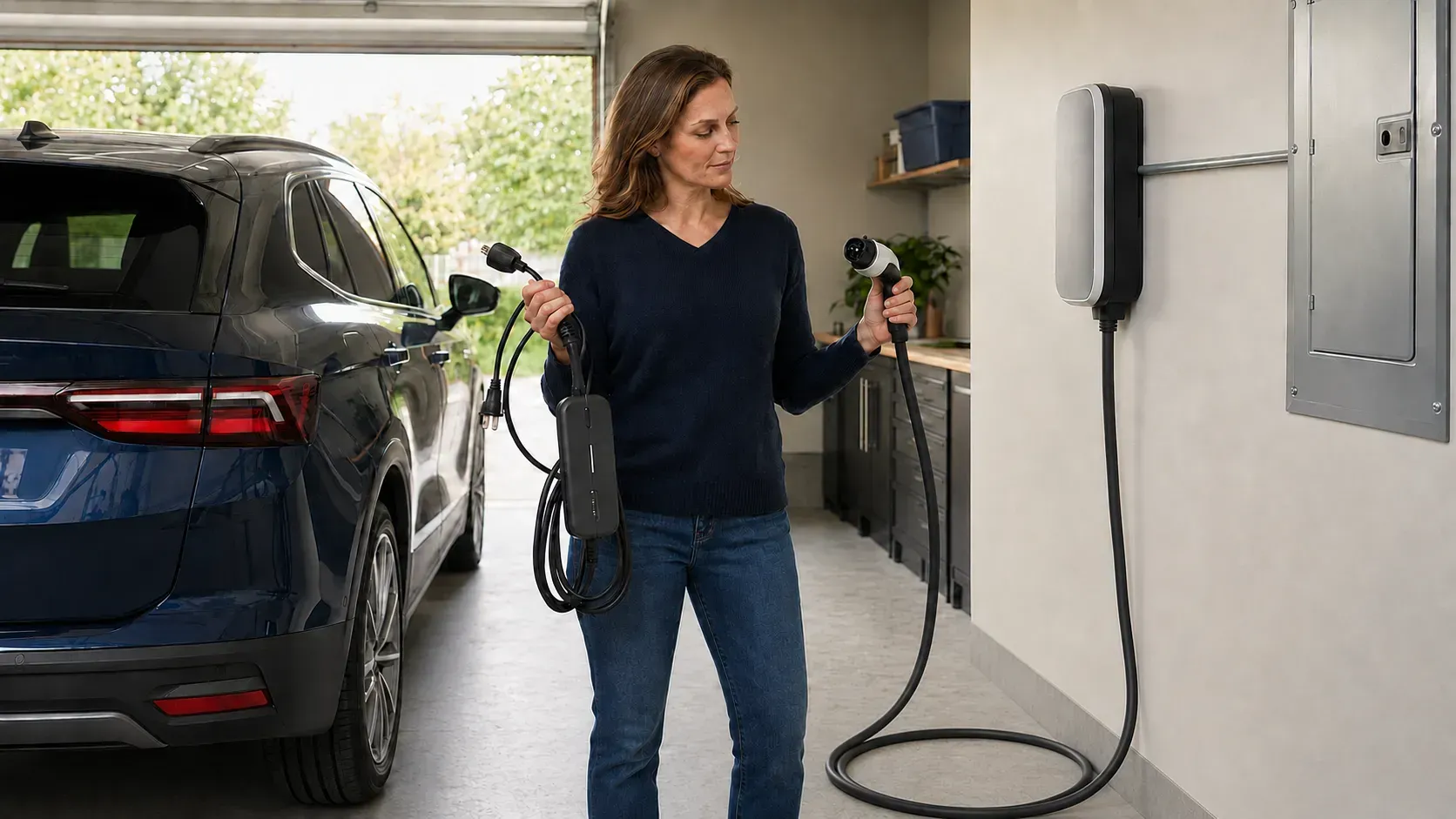
A plug-in Level 2 charger requires a compatible 240-volt receptacle on an appropriately designed circuit. A hardwired charger is connected directly to the circuit.
Plug-in equipment can be easier to remove or replace, but the receptacle and plug introduce additional components. The receptacle must be suitable for sustained EV charging, and applicable electrical requirements may add equipment or labor to the installation.
Hardwired installation is commonly considered for outdoor locations and higher-capacity chargers. It eliminates the plug-and-receptacle connection but makes moving the charger less convenient.
Neither method is universally less expensive. The correct comparison must include the entire circuit, required protection, equipment location and intended charger output.
Outdoor Chargers and Detached Garages
Outdoor charging can be safe and convenient when suitable equipment and installation methods are used. However, outdoor projects may require weather-rated components, protected wiring, more durable mounting and careful cable storage.
Costs can increase when the circuit must cross a yard, driveway or other finished surface. Trenching may require excavation, conduit, restoration of landscaping or pavement and coordination with other underground utilities.
A detached garage may also require an evaluation of the existing electrical supply to that structure. An available breaker space in the detached garage does not necessarily mean that the feeder serving it can support a substantial new charging load.
Learn more about planning an outdoor EV charger installation.
Permits and Inspection Should Be Included
A professional estimate should explain who is responsible for the permit and final inspection. Permit costs are not usually the largest part of an installation, but omitting them can create an inaccurate price comparison.
The permit process helps confirm that the circuit, conductors, breaker, equipment and installation method satisfy applicable safety requirements. It also creates a record of the completed electrical work.
Santa Rosa provides online building-permit resources, but the required documentation can vary according to the project. Current information should be confirmed through the City of Santa Rosa Building Division.
Our guide to EV charger permits in Santa Rosa provides an overview of what homeowners can expect.
Smart Charging and Load Management
Smart features can influence both the equipment price and the overall installation strategy.
A Wi-Fi-connected charger may provide scheduling, usage monitoring and remote controls. Some systems can coordinate two EVs or adjust charging in response to household electrical demand.
Dynamic load management may be especially valuable when the home has limited available electrical capacity. Instead of allowing the charger and major household appliances to create excessive simultaneous demand, the system can temporarily reduce charging output.
This equipment adds cost, but in the right situation it may be less expensive and less disruptive than a full service upgrade. The available options should be evaluated by someone familiar with both the electrical system and the proposed charger.
See our detailed guide to smart EV chargers and home energy management.
What Should a Professional Estimate Include?
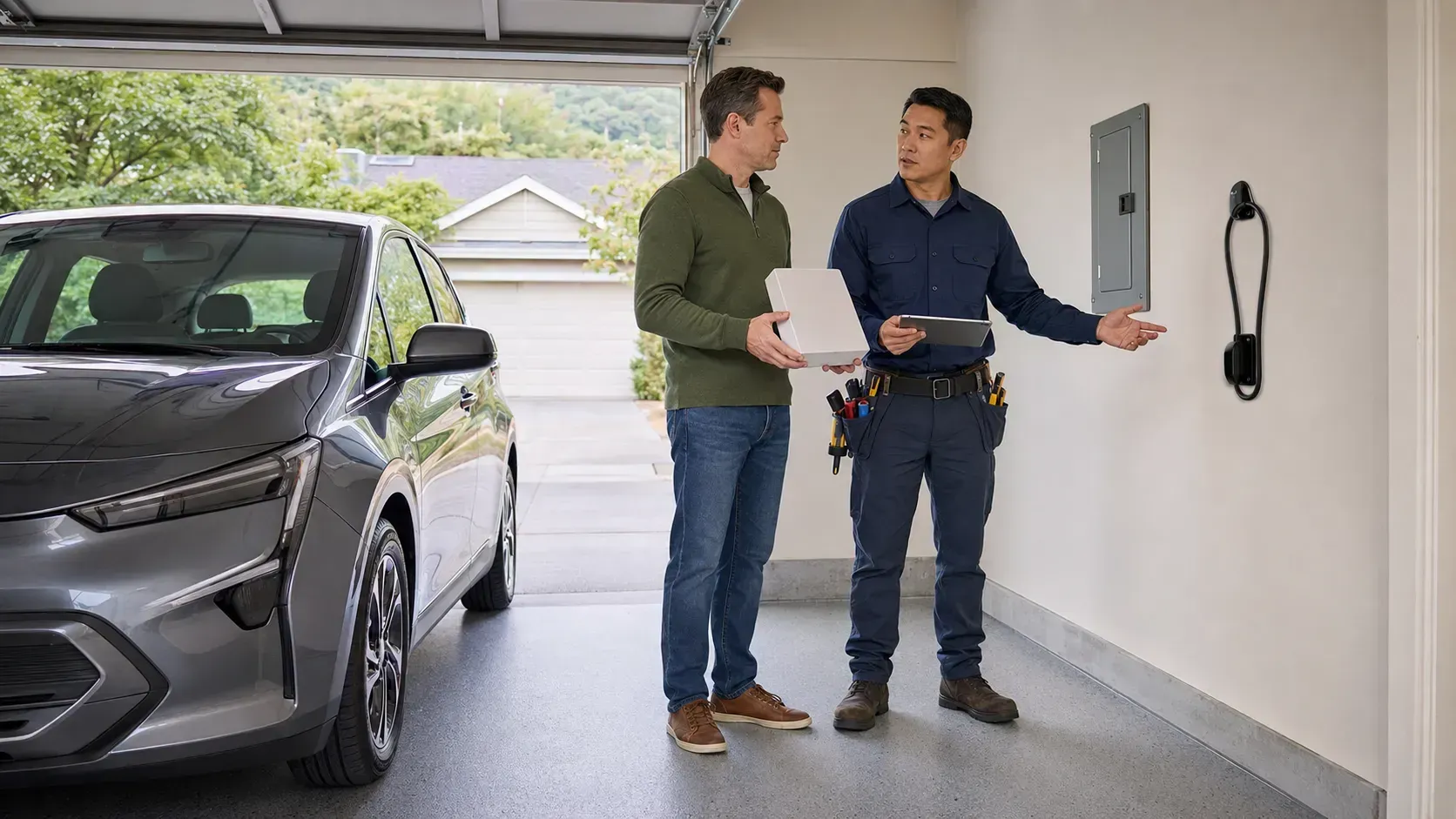
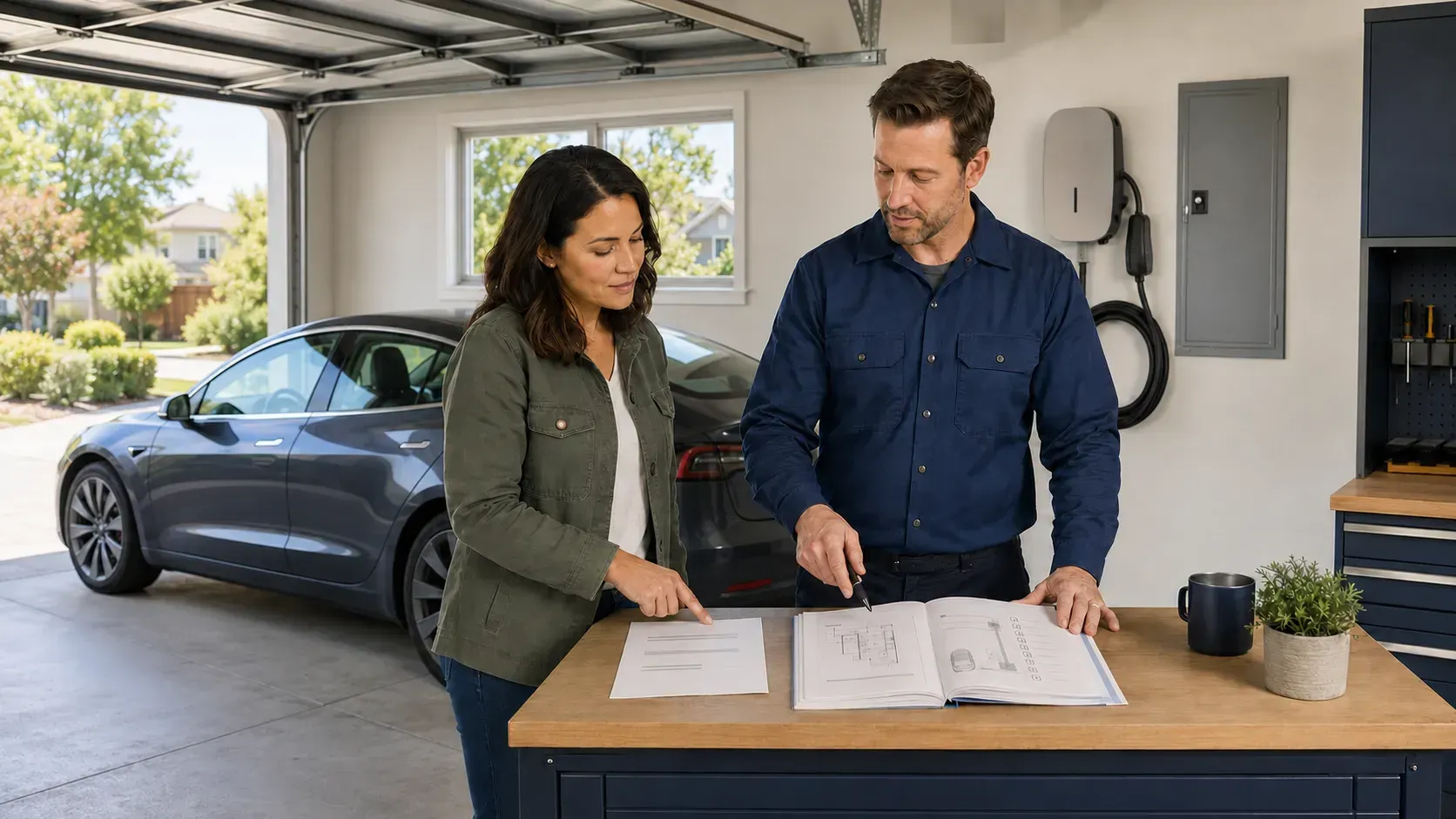
A written estimate should be detailed enough to show what the homeowner is purchasing. At minimum, it should identify:
- Charger model or owner-supplied equipment
- Circuit and proposed charging capacity
- Breaker and wiring requirements
- Charger location
- Expected wiring route
- Plug-in or hardwired connection
- Permit and inspection responsibility
- Any panel, trenching or repair work included
- Assumptions that could affect the final price
- Warranty coverage for the installation
When comparing estimates, look beyond the total. Confirm that each contractor is proposing the same charging capacity and scope of work. One estimate may exclude the permit, charger, trenching, drywall repair or panel modifications included in another.
A thoughtful estimate should also explain why the proposed charging capacity is appropriate. Installing the largest possible circuit is not always necessary, but choosing an undersized solution without considering daily driving can create frustration later.
Plan for Future Electrical Needs
An EV charger may not be the last major electrical addition to the home. A second EV, heat pump, electric water heater, induction range, solar system or battery may change future demand.
Discussing those plans before the installation does not necessarily mean paying for every possible upgrade today. It may influence the charger setting, panel arrangement, conduit size, load-management strategy or equipment location.
Good planning can make a future expansion easier while keeping the present project practical.
Get a Site-Specific EV Charger Estimate
Online price ranges are useful for initial planning, but they cannot account for the electrical system and physical conditions of an individual Santa Rosa home.
A site-specific assessment should answer four essential questions:
- What charging capacity does the homeowner actually need?
- Can the existing electrical system safely support it?
- What wiring route and equipment are appropriate?
- What work is included in the proposed price?
Once those questions are answered, the installation cost becomes much easier to understand and compare.
Contact us to discuss your vehicle, home and preferred charging location. We can help you identify the next step toward a safe, convenient and properly planned home EV charging installation.
Contact Us
Contact Us - Blog - Installation Cost